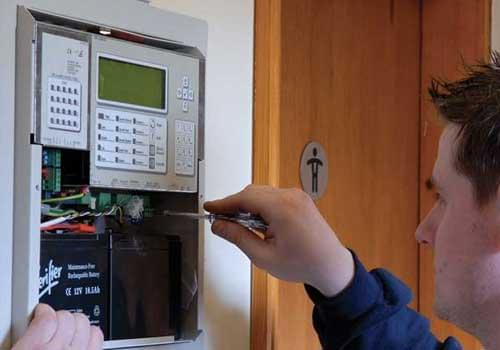
A commercial fire alarm system is one of the most important life safety investments your business will make, but it won't remain effective forever. As systems age, become outdated or no longer meet current regulations, they can become less reliable and more expensive to maintain.
If you're responsible for managing a commercial building, your fire alarm system is something you probably don't think about until there's a problem. Yet it remains one of the most critical systems protecting your employees, visitors, property and business continuity.
Whether you manage an office, warehouse, manufacturing facility, school, care home, hotel, or retail premises, recognising when it's time for a fire alarm upgrade or system takeover can help you avoid costly failures, operational disruption, and severe compliance issues.
Key Takeaways: When to Upgrade or Arrange a Takeover
- The 10-Year Mark: Fire alarm systems approaching ten years old require a thorough professional evaluation, as replacement parts become scarce and components become obsolete.
- The Power of a Takeover: A professional takeover allows a specialist to adopt, maintain, and monitor your existing system (whether conventional, addressable, or wireless), saving you the high cost of a complete replacement.
- Layout & Regulation Changes: Modifying your building layout or failing to align with the latest BS 5839-1:2025 standards are immediate triggers for a system review.
What Is a Fire Alarm System Takeover?
A fire alarm takeover involves a specialist fire and security company assuming responsibility for servicing, maintaining, and monitoring an existing fire alarm system originally installed by another provider.
Rather than replacing everything immediately, an experienced engineer will assess the condition of your existing equipment - whether you operate conventional, addressable, or wireless fire alarms - to determine whether it remains compliant and identify opportunities to improve reliability, monitoring and future maintenance.
In many cases, a professionally managed takeover allows businesses to extend the life of their existing system while creating a planned, budget-friendly pathway for future upgrades. For organisations whose original installer has ceased trading, no longer offers adequate support or cannot service older equipment, a takeover provides continuity without unnecessary replacement costs.
Six Warning Signs Your Fire Alarm System Needs Attention
1. Your Fire Alarm System Is More Than 10 Years Old
Age alone doesn't mean a system is broken, but once it approaches the ten-year mark, a professional review is essential. Most manufacturers only guarantee replacement parts and technical support for around a decade. Beyond this, sourcing replacement detectors, control panels, and interface modules becomes difficult and expensive.
Older systems are also increasingly vulnerable to:
- Electronic component failures
- Reduced detector sensitivity
- Outdated, unsupported software and control panels
- Steadily rising emergency repair costs
If component failures are becoming frequent, it is strongly advised to review whether to replace commercial smoke detectors every 10 years or plan a full system refresh.
2. Your System No Longer Meets Current Standards
Fire safety legislation and industry best practice continue to evolve. In the UK, commercial fire detection is governed by strict regulations to protect non-domestic premises.
If your system hasn't been reviewed recently, it may not align with the latest changes to BS 5839-1:2025 fire safety regulations, leaving potential gaps in your required standard for design, installation, commissioning, and maintenance.
3. Your Building Has Changed or Expanded
Commercial buildings rarely remain static. If you have extended your premises, converted offices into meeting rooms, added warehouse partitioning, or altered escape routes, your fire risk must be reassessed.
Premises such as care homes, hotels, and Houses in Multiple Occupation (HMOs) often require specialised Category L1 systems (providing automatic detection throughout the entire building). If your alarm was designed for a previous layout, you may have dangerous blind spots.
4. False Alarms Are Becoming More Frequent
While an occasional false alarm happens, regular unwanted activations are a major warning sign that your system requires attention.They are usually caused by ageing detectors, contaminated sensors, damaged wiring or failing control panels. Frequent false alarms cause serious issues, including:
- Severe disruption to daily business operations
- Unnecessary building evacuations
- Erosion of staff confidence (leading to people ignoring genuine alarms)
- Costly local authority or fire service call-out charges
In many cases, recurring false alarms indicate that repairing individual components is becoming less cost-effective than upgrading the system as a whole.
5. Your Fire Alarm Isn't Connected to Modern Monitoring
One of the biggest differences between older and modern commercial fire alarm systems is how quickly they communicate an emergency. Who receives the alert if activation occurs when the building is empty overnight or during weekends? Would emergency services be notified? Without professional 24/07 remote alarm monitoring, an activation could go unnoticed until after severe damage has occurred.
Modern monitored fire alarm systems immediately transmit signals to an NSI-approved Alarm Receiving Centre (ARC),where trained operators can verify the activation and initiate the appropriate response, drastically reducing potential property damage. For businesses operating outside normal working hours, remote monitoring isn't simply an added feature - it's an essential part of protecting people, assets and business continuity.
6. Your Fire Alarm Doesn't Integrate with Other Building Systems
Older fire alarm systems often operate in isolation. Modern commercial solutions can integrate directly with CCTV, access control, intruder alarms, and mobile app alerts.
This joined-up approach can automatically unlock access-controlled doors during an evacuation, redirect surveillance cameras to the source of an alarm, and send instant push notifications directly to building managers' smartphones.
Your Next Steps: From Review to Resolution
Step 1: Arrange a Fire Risk Assessment (FRA)
If your FRA hasn't been reviewed recently, start here. An up-to-date assessment will determine whether your existing detection coverage is legally sufficient, evaluate layout changes, and define the correct fire alarm category required for your business.
(If you are unsure who to approach to carry out your Fire Risk Assessment, let us know and our team can point you in the right direction
Step 2: Choose an Accredited Fire Alarm Specialist
Always appoint an accredited company with recognised third-party certifications, such as BAFE, NSI Gold, or SSAIB. An experienced partner like Justice Fire & Security can safely evaluate your current installation, takeover your existing contract, and recommend cost-effective conventional, addressable, or wireless upgrades. As part of our professional commercial service and maintenance, all takeovers and upgrades come complete with certified design, installation, and commissioning handover documentation
Protect Your Business Before Problems Develop
Fire alarm systems are not a "fit and forget" investment. As your business evolves and regulations change, your fire protection should evolve too. Whether your existing system is showing signs of age, your building layout has changed, or you're simply no longer receiving the level of support you need from your current provider, arranging a professional assessment now prevents costly emergency repairs later.
At Justice Fire & Security, we've spent more than 40 years helping organisations across Birmingham and the wider Midlands protect their people and premises. Our highly experienced team of engineers covers the Greater Midlands area, including Birmingham, Wolverhampton, Bromsgrove, Halesowen, Dudley, Kidderminster, Solihull, Sutton Coldfield, Coventry, Lichfield, Cannock, Telford, and Stoke.
Contact our team today on 0845 468 9077 to arrange your commercial fire alarm takeover or upgrade assessment.
Frequently Asked Questions About Commercial Fire Alarm Takeover
What is a commercial fire alarm takeover?
A fire alarm takeover is when a new accredited provider assumes responsibility for servicing, maintaining and supporting an existing fire alarm system installed by another company. The system is inspected, tested and assessed before ongoing maintenance begins.
How long does a commercial fire alarm system last?
While many systems continue operating beyond ten years, manufacturers often discontinue components after this period. Regular assessments help determine whether continued maintenance remains practical or whether upgrading will offer better reliability and value.
Does every older fire alarm need replacing?
No. Some systems remain perfectly serviceable with appropriate maintenance. A professional assessment will establish whether repairs, upgrades or a complete takeover represent the most suitable solution.
Can an older fire alarm system be upgraded instead of replaced?
In many cases, yes. Existing systems can often be enhanced with newer detectors, monitoring capabilities or improved control equipment. However, where components have become obsolete or the system no longer meets current requirements, replacement may prove the more economical long-term option.